"Battle of the Clouds". Economist 392.8653 (17 Oct 2009): 16.
This article explores cloud computing within the frame of its technological history and future. It points out that cloud computing could easily follow the traditional path of new technological advances, that of big firms battling over who can make the most money off of it. However, cloud computing in some ways inherently supports the little guy. Since the cloud can act like a utility in that you pay for what you use, owning a bunch of servers is no longer a prerequisite to starting a computer business. It would seem like this would help create competition and prevent monopolies from forming, but the history of computing tends to show otherwise.
The article pinpoints "technological lock-in" as a sign that the battle of the clouds has begun. This term, which describes companies who develop standards and formats for their own systems that cannot communicate with any others, reminded me of Wheeler and Waggener's article about cloud computing for universities. Both articles discuss the need for an open cloud to maximize benefit. Since the cloud is a Web 2.0 technology that centers around sharing and networking, it seems ironic to me that companies are trying to reduce the amount of sharing that can be done. Based on Tim O'Reilly's theory, it seems like the more a company participates in web sharing, the more successful they should be. The article casts doubt on the claim that one company will end up dominating the cloud, but does not seem to refute the idea that the current major computing companies will eventually control the cloud. Given the short and transient nature of companies in the computer field thus far, it is impossible to predict what will happen in therms of computer company dominance. The article plays its predictions safely by only naming companies in the current struggle and keeping future descriptions vague.
The article touches on cloud search history and its potential effect on companies. Though information agencies are not specifically mentioned, this aspect of cloud computing may well be one of the biggest hurdles for libraries who want to use the cloud. Search history in the cloud can be stored forever, and since libraries (or other institutions) would not have direct control over it, it would be easy for the cloud company to view it without the library's knowledge or to use it for their own data-gathering. The article points out that making cloud systems reliable should currently be a top priority for companies that want to attract customers. I wholeheartedly agree, and would add trustworthy to that statement as well. I think librarians concerned about privacy and censorship would be at least as concerned about trust in the cloud as they are about cloud reliability.
Saturday, November 21, 2009

Friday, November 20, 2009
Resource Review #7 Above-Campus Services: Shaping the Promise of Cloud Computing for Higher Education
Wheeler, Brad and Waggener, Shelton. "Above-Campus Services: Shaping the Promise of Cloud Computing for Higher Education". EDUCAUSE Review, 44.6 (2009): 52-67.
This article focuses on how cloud computing can improve university services. I had not yet read an article about cloud computing from this perspective, and so learned quite a bit from it. The authors believe that cloud computing in a university setting can create completely new capabilities and opportunities. For it to work best and provide the maximum benefit to everyone, universities need to be active participants in the scholarly community. Wheeler and Waggener envision the cloud as becoming a "framework of open materials and platforms on which much of higher education worldwide can be constructed or enhanced." If universities use the cloud to collaborate, everyone will benefit from the shared resources and cost savings. They use the HathiTrust as an example, a book digitization project launched by the University of Michigan and Indiana University. They point out that it would not make much sense for every university to digitize the same books. By making these books available for others to see, either through public domain or with copyright regulations, all universities can benefit.
For me, an interesting aspect of the article is that it does not label the cloud as being either dangerous or essential. The tone is positive, and there are no warnings about either becoming too dependent on the cloud or not using it enough. Wheeler and Waggener focus on power of the universities to choose how they use the cloud. They list ways cloud technology can further university goals, but the results are largely dependent on how collaborative universities wish to be. I really like the emphasis they place on individual university choice. The way they discuss cloud computing in their article reminds me that it is in fact a tool that can be used in various ways to fit our needs. I think the topic of cloud computing often elicits strong reactions, and it is seen as the new technology that is taking over the world and there is nothing we can do about it. There are more options than just to swallow it whole or dig a hole to hide from it. Wheeler and Waggener do a great job of framing cloud computing in a way to show that there really are more than just these two options.
One of the main strengths of this article is that it explores cloud computing in the light of the university setting, not universities in the light of the cloud computing setting. Wheeler and Waggener describe the positive characteristics of academia and how cloud computing can best compliment those. Their article is a reminder that, for universities, there is already an adequate framework in place for incorporating new technology. I think this approach removes much of the fear and uncertainty that can surround cloud computing, and is a great guide for universities thinking about pursuing it.
This article focuses on how cloud computing can improve university services. I had not yet read an article about cloud computing from this perspective, and so learned quite a bit from it. The authors believe that cloud computing in a university setting can create completely new capabilities and opportunities. For it to work best and provide the maximum benefit to everyone, universities need to be active participants in the scholarly community. Wheeler and Waggener envision the cloud as becoming a "framework of open materials and platforms on which much of higher education worldwide can be constructed or enhanced." If universities use the cloud to collaborate, everyone will benefit from the shared resources and cost savings. They use the HathiTrust as an example, a book digitization project launched by the University of Michigan and Indiana University. They point out that it would not make much sense for every university to digitize the same books. By making these books available for others to see, either through public domain or with copyright regulations, all universities can benefit.
For me, an interesting aspect of the article is that it does not label the cloud as being either dangerous or essential. The tone is positive, and there are no warnings about either becoming too dependent on the cloud or not using it enough. Wheeler and Waggener focus on power of the universities to choose how they use the cloud. They list ways cloud technology can further university goals, but the results are largely dependent on how collaborative universities wish to be. I really like the emphasis they place on individual university choice. The way they discuss cloud computing in their article reminds me that it is in fact a tool that can be used in various ways to fit our needs. I think the topic of cloud computing often elicits strong reactions, and it is seen as the new technology that is taking over the world and there is nothing we can do about it. There are more options than just to swallow it whole or dig a hole to hide from it. Wheeler and Waggener do a great job of framing cloud computing in a way to show that there really are more than just these two options.
One of the main strengths of this article is that it explores cloud computing in the light of the university setting, not universities in the light of the cloud computing setting. Wheeler and Waggener describe the positive characteristics of academia and how cloud computing can best compliment those. Their article is a reminder that, for universities, there is already an adequate framework in place for incorporating new technology. I think this approach removes much of the fear and uncertainty that can surround cloud computing, and is a great guide for universities thinking about pursuing it.
Saturday, November 7, 2009
Resource Review #6 Libraries in the Cloud: Making a Case for Google and Amazon
Buck, S. Libraries in the Cloud: Making a Case for Google and Amazon. Computers in Libraries v. 29 no. 8 (September 2009) p. 6-10
The author of this article, Stephanie Buck, defines herself as a MLS student at Simmons College, a fact I am impressed with considering her accomplishment of being published in the Computers in Libraries journal. The article covered the same bases as most introduction-to-cloud-computing articles, but its particular strength was describing the cost-effectiveness of the cloud model for libraries. The Google Apps suite costs $50 dollars a year, and operates comparably to the Microsoft Office Suite, which costs $500 dollars a year. The switch would equal huge savings for libraries. Another application, Amazon's S3, a cloud data storage system, charges are associated with individual requests for storage and transfer, so libraries only pay for what they use. Buck suggests using money saved on software for other places within the IT budget.
However, Buck is quick to point out that the cloud is not a perfect storage alternative in terms of cost. Traditional internal storage systems aim to reduce cost to the customer over a period of time by transferring older and less-accessed data to less expensive media. Current cloud computing companies charge exactly the same no matter how long the data has been stored. Consequently, cloud storage could potentially cost more long-term. Personally, I think that since cloud computing has not been around very long, it is impossible to predict how favorable it will be to store data long-term on the cloud. I am sure as cloud storage techniques become more fine-tuned and culturally popular that companies will adjust their rates to be competitive.
There is also the cost issue of migrating internally stored data to cloud applications, and the future potential for having to migrate data from one cloud application to another. Just because data is stored on the cloud does not mean its storage techniques will remain eternally viable. One librarian who is considering Amazon's S3 for his library commented that for him there is really no difference between having to migrate because of hardware obsolescence or service obsolescence, and that the faster retrieval times for patron requests and the clearing of local server space make the cloud option appealing. I agree with this reasoning. Considering how much sense cloud computing makes for libraries from an economic and service prospective, as well as its increasing popularity with the general public, I think it is the necessary technological future for libraries.
The author of this article, Stephanie Buck, defines herself as a MLS student at Simmons College, a fact I am impressed with considering her accomplishment of being published in the Computers in Libraries journal. The article covered the same bases as most introduction-to-cloud-computing articles, but its particular strength was describing the cost-effectiveness of the cloud model for libraries. The Google Apps suite costs $50 dollars a year, and operates comparably to the Microsoft Office Suite, which costs $500 dollars a year. The switch would equal huge savings for libraries. Another application, Amazon's S3, a cloud data storage system, charges are associated with individual requests for storage and transfer, so libraries only pay for what they use. Buck suggests using money saved on software for other places within the IT budget.
However, Buck is quick to point out that the cloud is not a perfect storage alternative in terms of cost. Traditional internal storage systems aim to reduce cost to the customer over a period of time by transferring older and less-accessed data to less expensive media. Current cloud computing companies charge exactly the same no matter how long the data has been stored. Consequently, cloud storage could potentially cost more long-term. Personally, I think that since cloud computing has not been around very long, it is impossible to predict how favorable it will be to store data long-term on the cloud. I am sure as cloud storage techniques become more fine-tuned and culturally popular that companies will adjust their rates to be competitive.
There is also the cost issue of migrating internally stored data to cloud applications, and the future potential for having to migrate data from one cloud application to another. Just because data is stored on the cloud does not mean its storage techniques will remain eternally viable. One librarian who is considering Amazon's S3 for his library commented that for him there is really no difference between having to migrate because of hardware obsolescence or service obsolescence, and that the faster retrieval times for patron requests and the clearing of local server space make the cloud option appealing. I agree with this reasoning. Considering how much sense cloud computing makes for libraries from an economic and service prospective, as well as its increasing popularity with the general public, I think it is the necessary technological future for libraries.
Saturday, October 31, 2009
Resource Review #5 Library Cloud Atlas: A Guide to Cloud Computing and Storage
Ellyssa Kroski. "Library Cloud Atlas: A Guide to Cloud Computing and Storage". Library Journal.com. 10 September 2009.
The part of this article that really grabbed my attention was near the end where Kroski discusses how libraries have been transitioning to cloud computing. She mentions the LITA Top Tech Trends panel at the 2009 ALA Conference at Chicago this summer, of which cloud computing was a main topic. Libraries were counseled to carefully consider what information they wanted to entrust to the cloud. One person argued that libraries who chose cloud computing relinquished their responsibility to preserve information. Privacy issues, such as patron records, can also be a problem in the cloud.
Kroski lists several libraries that have transferred information to the cloud. All the libraries listed are using applications from Google (in the form of App Engine, Docs, or Analytics) or Amazon (in the form of EC2 or S3). The easiest ones to see are the libraries hosting their websites through either App Engine or EC2. I spent some time browsing the DC Public Library's page that Kroski mentions. It is quite trendy. The front page includes a list of the Top Downloads and rotating photos of the covers of popular books. Unfortunately, when I tried to use the catalog I received an error message. I am not sure if that has anything to do with the cloud computing aspect of the website, but it was disappointing nevertheless.
The part of this article that really grabbed my attention was near the end where Kroski discusses how libraries have been transitioning to cloud computing. She mentions the LITA Top Tech Trends panel at the 2009 ALA Conference at Chicago this summer, of which cloud computing was a main topic. Libraries were counseled to carefully consider what information they wanted to entrust to the cloud. One person argued that libraries who chose cloud computing relinquished their responsibility to preserve information. Privacy issues, such as patron records, can also be a problem in the cloud.
Kroski lists several libraries that have transferred information to the cloud. All the libraries listed are using applications from Google (in the form of App Engine, Docs, or Analytics) or Amazon (in the form of EC2 or S3). The easiest ones to see are the libraries hosting their websites through either App Engine or EC2. I spent some time browsing the DC Public Library's page that Kroski mentions. It is quite trendy. The front page includes a list of the Top Downloads and rotating photos of the covers of popular books. Unfortunately, when I tried to use the catalog I received an error message. I am not sure if that has anything to do with the cloud computing aspect of the website, but it was disappointing nevertheless.
Thursday, October 29, 2009
Resource Review #4 Danger in the Clouds: 4 Lessons from the Sidekick Disaster
Jennifer Moebius. "Danger in the Clouds: 4 Lessons from the Sidekick Disaster". Cloud Computing Journal (14 Oct 2009).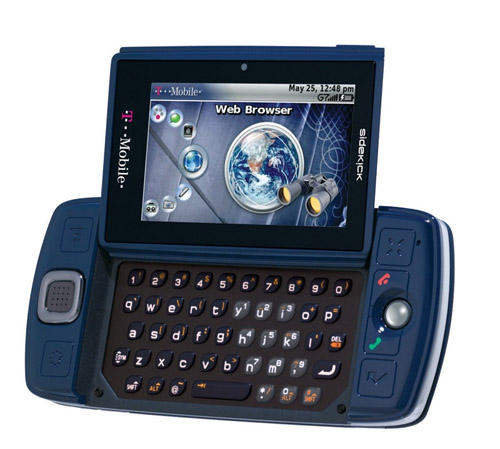
Earlier this month, a failed update to the server managing the data for the Sidekick mobile device caused widespread data loss for owners. The reason for the loss was the very reason Sidekick was so popular in the first place: cloud computing. Sidekick stores basically everything, including contacts, messages, and photos, on the cloud. This means that if an individual loses or damages their Sidekick all of their stored information is easily retrievable from the cloud. I doubt many Sidekick buyers anticipated their information begin wiped out by the very system that was supposed to protect it.
As I have focused on cloud computing this semester, I have come across numerous articles about the danger of storing information on the cloud. I find it ironic that at the same time I am exploring the potential downfalls of cloud computing, an real disaster occurs. This article quotes the BBC as saying it is "the biggest disaster yet for the whole concept of cloud computing". With the Sidekick fiasco fresh in mind, Moebius makes 4 main suggestions about using the cloud.
#1 The Cloud is not redundant
It can fail just like anything else
#2 Know your vendor
Know how your data is backed up, who backs it up, and how long it would take to restore
#3 Keep your options open
You can store your data in several cloud computing environments
#4 The only good backup is an offsite backup
Make sure your backups are not located in the same datacenter. The more offline it is stored, the safer it is.
I think these are all great suggestions. As Moebius points out, because we cannot see the cloud, it is easy to assume that it will continue to exist and work perfectly forever. I am sure this is just the first of many cloud failures we will experience as cloud computing becomes ubiquitious in our society. I hope there will be more articles like this one that alert people to how they can help keep their data safe.
Earlier this month, a failed update to the server managing the data for the Sidekick mobile device caused widespread data loss for owners. The reason for the loss was the very reason Sidekick was so popular in the first place: cloud computing. Sidekick stores basically everything, including contacts, messages, and photos, on the cloud. This means that if an individual loses or damages their Sidekick all of their stored information is easily retrievable from the cloud. I doubt many Sidekick buyers anticipated their information begin wiped out by the very system that was supposed to protect it.
As I have focused on cloud computing this semester, I have come across numerous articles about the danger of storing information on the cloud. I find it ironic that at the same time I am exploring the potential downfalls of cloud computing, an real disaster occurs. This article quotes the BBC as saying it is "the biggest disaster yet for the whole concept of cloud computing". With the Sidekick fiasco fresh in mind, Moebius makes 4 main suggestions about using the cloud.
#1 The Cloud is not redundant
It can fail just like anything else
#2 Know your vendor
Know how your data is backed up, who backs it up, and how long it would take to restore
#3 Keep your options open
You can store your data in several cloud computing environments
#4 The only good backup is an offsite backup
Make sure your backups are not located in the same datacenter. The more offline it is stored, the safer it is.
I think these are all great suggestions. As Moebius points out, because we cannot see the cloud, it is easy to assume that it will continue to exist and work perfectly forever. I am sure this is just the first of many cloud failures we will experience as cloud computing becomes ubiquitious in our society. I hope there will be more articles like this one that alert people to how they can help keep their data safe.
Monday, October 5, 2009
Resource Review #3 Mining Information from the Data Clouds by Erica Orange
Erica Orange. "Mining Information from the Data Clouds". Futurist 43.4 (2009): 17-21.
In this article, Erica Orange examines cloud computing from the perspective of a business futurist. She clearly explains the various types of clouds (public, private, and hybrid) and the numerous and creative ways people are currently using cloud computing. Right now cloud computing is being utilized to download videos in record time, design trucks, and track flu outbreaks. She reminds readers that most people are already using the cloud whether they know it or not. Activities such as updating bank balances online, purchasing an item online, uploading a YouTube video, or creating a blog entry are all being done in the cloud.
I admire how Orange gives a balanced and detailed view of both the positive and negative effects from cloud computing. Similar to other articles I found, she mentions the dangers of computing in the cloud, but mainly focuses on the consequences that result from the difficulty of deleting data and ease of obtaining it. Though she mentions the possibility of terrorism and misuse of this data by governments and companies, she does not delve into conspiracy theories or 1984-type predictions. She is also more specific about cloud computing benefits than other articles I have come across, such as the truck-designing and flu-tracking.
Orange dedicates a good portion of her article to how cloud computing is changing the way information and society interact. As the title implies, she shows how companies are planning to use increasingly available user information to shape how they do business and target customers. This can be seen as beneficial in that users are able to contribute to and ultimately control the type of services they get. However, Orange points out in her conclusion that the exact opposite may be true: that the technology may in fact be contributing to and controlling what we want. This is certainly an intriguing idea, and one I hope will be explored more in the cloud computing dialogue.
In this article, Erica Orange examines cloud computing from the perspective of a business futurist. She clearly explains the various types of clouds (public, private, and hybrid) and the numerous and creative ways people are currently using cloud computing. Right now cloud computing is being utilized to download videos in record time, design trucks, and track flu outbreaks. She reminds readers that most people are already using the cloud whether they know it or not. Activities such as updating bank balances online, purchasing an item online, uploading a YouTube video, or creating a blog entry are all being done in the cloud.
I admire how Orange gives a balanced and detailed view of both the positive and negative effects from cloud computing. Similar to other articles I found, she mentions the dangers of computing in the cloud, but mainly focuses on the consequences that result from the difficulty of deleting data and ease of obtaining it. Though she mentions the possibility of terrorism and misuse of this data by governments and companies, she does not delve into conspiracy theories or 1984-type predictions. She is also more specific about cloud computing benefits than other articles I have come across, such as the truck-designing and flu-tracking.
Orange dedicates a good portion of her article to how cloud computing is changing the way information and society interact. As the title implies, she shows how companies are planning to use increasingly available user information to shape how they do business and target customers. This can be seen as beneficial in that users are able to contribute to and ultimately control the type of services they get. However, Orange points out in her conclusion that the exact opposite may be true: that the technology may in fact be contributing to and controlling what we want. This is certainly an intriguing idea, and one I hope will be explored more in the cloud computing dialogue.
Saturday, September 26, 2009
Resource Review #2 The Web as the Ubiquitous Computer by Vishnu Pendyala and Simon Shim
Vishnu S. Pendyala and Simon S.Y. Shim. "The Web as the Ubiquitous Computer." Computer 42.9 (2009): 90 -92.
This article explains cloud computing in the context of societal trends to explain why it is so popular. It particularly explores how the use of mobile devices have influenced the development cloud computing. Mobility of technology has become increasingly important in our lives, and cloud computing is in some ways the perfect match. Pendyala and Shim delve into the specific advantages and challenges cloud computing presents, both in the short and long term.
The link the article made between the technology of cloud computing and our demand for increasingly smaller and connected mobile devices made a lot of sense to me. Cloud computing is a perfect match for our small mobile devices with a short battery life. It makes software on demand possible, meaning you only pay for what you use, like a utility. It allows for lowered cost and simplified maintenance of mobile devices because the devices themselves no longer have to contain within them the space to store the software, they only need the ability to communicate with the server. As the article points out, this leads to huge cost savings for basically everyone involved and greater accessibility.
In exploring the downside to cloud computing, I like how Pendyala and Shim touch on more than just the security aspect of it. While security concerns are an issue they mention, they offer up ideas on how cloud computing technology could leave us dependent on service providers. They point out that it would be easy for a provider to change its terms or go out of business; leaving customers without the data and applications they need. I believe this article is an important contribution to the cloud computing dialogue.
This article explains cloud computing in the context of societal trends to explain why it is so popular. It particularly explores how the use of mobile devices have influenced the development cloud computing. Mobility of technology has become increasingly important in our lives, and cloud computing is in some ways the perfect match. Pendyala and Shim delve into the specific advantages and challenges cloud computing presents, both in the short and long term.
The link the article made between the technology of cloud computing and our demand for increasingly smaller and connected mobile devices made a lot of sense to me. Cloud computing is a perfect match for our small mobile devices with a short battery life. It makes software on demand possible, meaning you only pay for what you use, like a utility. It allows for lowered cost and simplified maintenance of mobile devices because the devices themselves no longer have to contain within them the space to store the software, they only need the ability to communicate with the server. As the article points out, this leads to huge cost savings for basically everyone involved and greater accessibility.
In exploring the downside to cloud computing, I like how Pendyala and Shim touch on more than just the security aspect of it. While security concerns are an issue they mention, they offer up ideas on how cloud computing technology could leave us dependent on service providers. They point out that it would be easy for a provider to change its terms or go out of business; leaving customers without the data and applications they need. I believe this article is an important contribution to the cloud computing dialogue.
Subscribe to:
Posts (Atom)